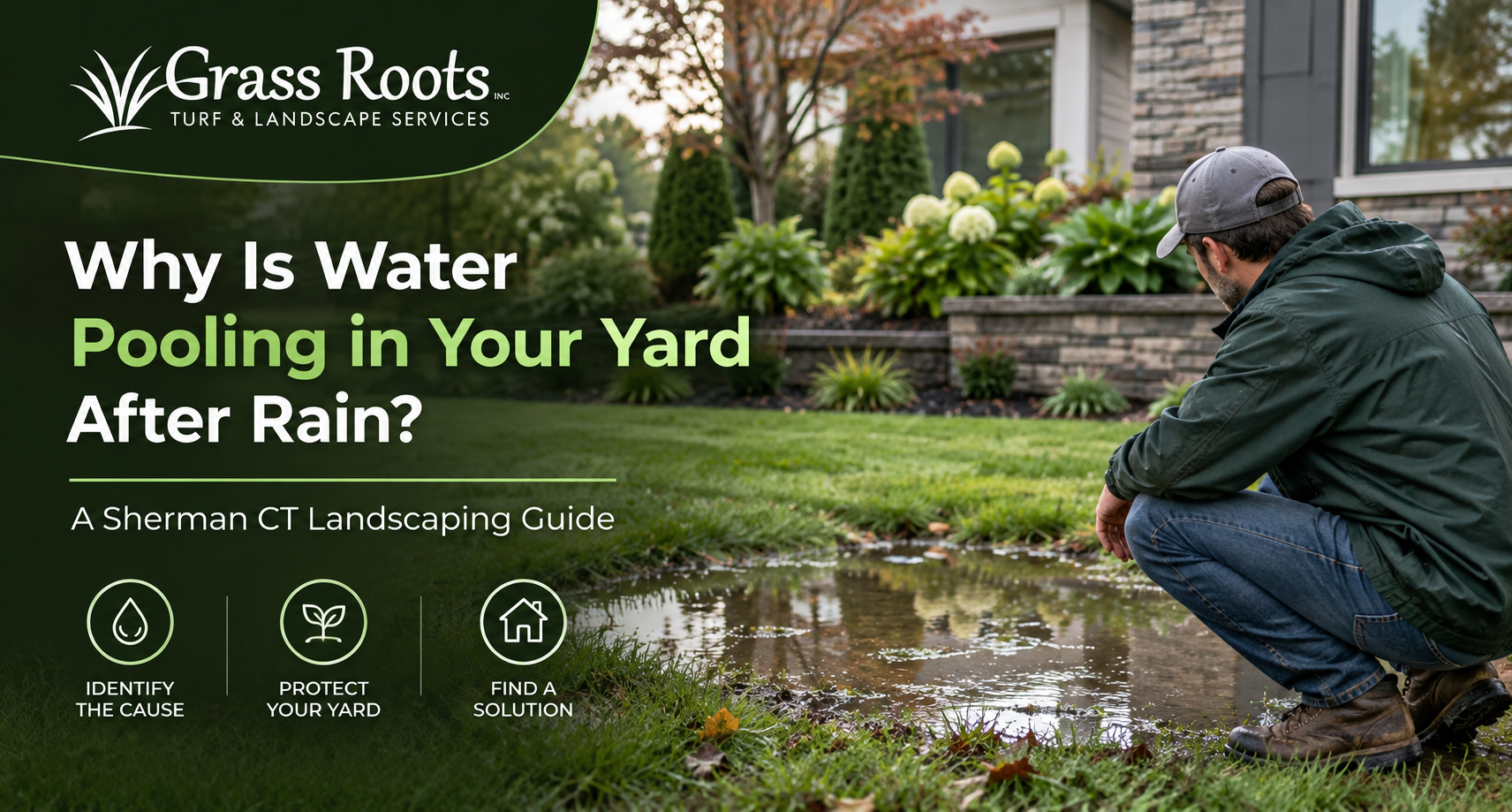
After a heavy rain, it is normal for a yard to be wet for a while. But if you regularly notice puddles that remain for hours or even days, your property may have a drainage problem. Standing water is more than an inconvenience. Over time, it can affect your lawn, landscaping, soil, and the way you use your outdoor space.
For homeowners in Sherman, CT, understanding why water collects in certain areas is the first step toward finding a practical solution. Here are some of the most common reasons water pools in a yard and what you should know about them.
Why Does Water Pool in a Yard?
Water naturally moves toward the lowest point of a property. Ideally, the landscape should guide rainwater away from the home and allow it to drain or soak gradually into the soil.
Problems begin when the ground is uneven, soil cannot absorb water efficiently, or runoff is directed toward one area. If water repeatedly collects in the same spot after rain, it is usually worth looking at the surrounding grade, soil, lawn, gutters, and landscape design.
A Professional landscaping company in SHERMAN CT can evaluate the overall property and help identify landscape conditions that may be contributing to drainage problems.
1. Poor Yard Grading
Grading describes the slope and shape of the land. A properly planned yard generally directs water away from important areas rather than allowing it to settle in low spots.
Over time, soil can settle and create depressions. Landscaping projects, construction, foot traffic, and natural changes to the ground may also affect how water moves.
If one section of your lawn consistently becomes a small pond after every storm, a low area or grading issue may be responsible.
2. Compacted Soil
Healthy soil contains spaces that allow water and air to move through it. When soil becomes heavily compacted, those spaces are reduced, making it harder for rainwater to soak into the ground.
Compaction can result from frequent foot traffic, vehicles, construction equipment, or naturally dense soil conditions.
You might notice water sitting on the surface rather than disappearing into the lawn. Grass in compacted areas may also appear thin or struggle to grow well.
3. Lawn Thatch and Poor Soil Conditions
A small amount of organic material in a lawn is normal. However, an excessive layer of thatch can interfere with the movement of water, nutrients, and air toward the soil.
Other soil conditions may also affect drainage and lawn health. This is why standing water and unhealthy grass sometimes appear together.
Professional Lawn care services in NEWTOWN CT can address broader lawn-maintenance needs such as mowing, fertilization, aeration, seeding, and seasonal care based on the condition of the property.
4. Downspouts May Be Sending Water to the Wrong Place
Sometimes the problem is not the lawn itself. Gutters and downspouts collect large amounts of rainwater from the roof. If a downspout releases that water directly into a low area, the ground may not be able to absorb it quickly enough.
After the next rainfall, watch where water leaves your downspouts. If it flows toward garden beds, walkways, the foundation, or an already wet section of lawn, drainage improvements may be worth considering.
5. Landscape Design Can Affect Water Flow
Trees, planting beds, patios, walkways, retaining walls, and other landscape features can change the way water travels through a property.
A new patio, for example, creates a surface that does not absorb water like soil does. Rainwater must move somewhere after hitting that surface. Similarly, raised beds or landscape borders can unintentionally block natural drainage paths.
Good landscape planning considers appearance and function together. Grass Roots Inc provides landscape design, installation, lawn care, and property-maintenance services for residential and commercial properties in Western Connecticut.
Why Is Standing Water a Problem?
A puddle after a major storm is not automatically a serious issue. The concern is water that repeatedly remains in the same area for long periods.
Constantly saturated soil can make it difficult for some plants and turfgrass to thrive. Muddy areas can also make the yard harder to use and may contribute to erosion.
Standing water can also provide conditions where mosquitoes may breed if water remains long enough. That makes drainage an important part of maintaining a comfortable outdoor environment.
What Can Homeowners Do?
Start by observing your yard during and after rainfall. Look at where water enters the property, where it flows, and where it eventually collects.
Check gutters and downspouts for obvious problems. Notice whether the affected area is lower than the surrounding lawn and whether the soil feels heavily compacted.
Depending on the cause and property, possible solutions can involve correcting grading, improving soil conditions, changing drainage paths, adjusting landscaping, or installing an appropriate drainage system. Because every property is different, the correct solution depends on identifying the actual source of the problem first.
Final Thoughts
Water pooling after rain is often a sign that your landscape is not moving or absorbing water effectively. In Sherman, CT, factors such as grading, compacted soil, downspout placement, lawn conditions, and landscape features can all influence drainage.
Instead of repeatedly filling low areas or ignoring standing water, look at the property as a complete system. Understanding where the water comes from and why it stays there makes it easier to choose a long-term solution that supports a healthier lawn, better landscaping, and a more usable outdoor space.