
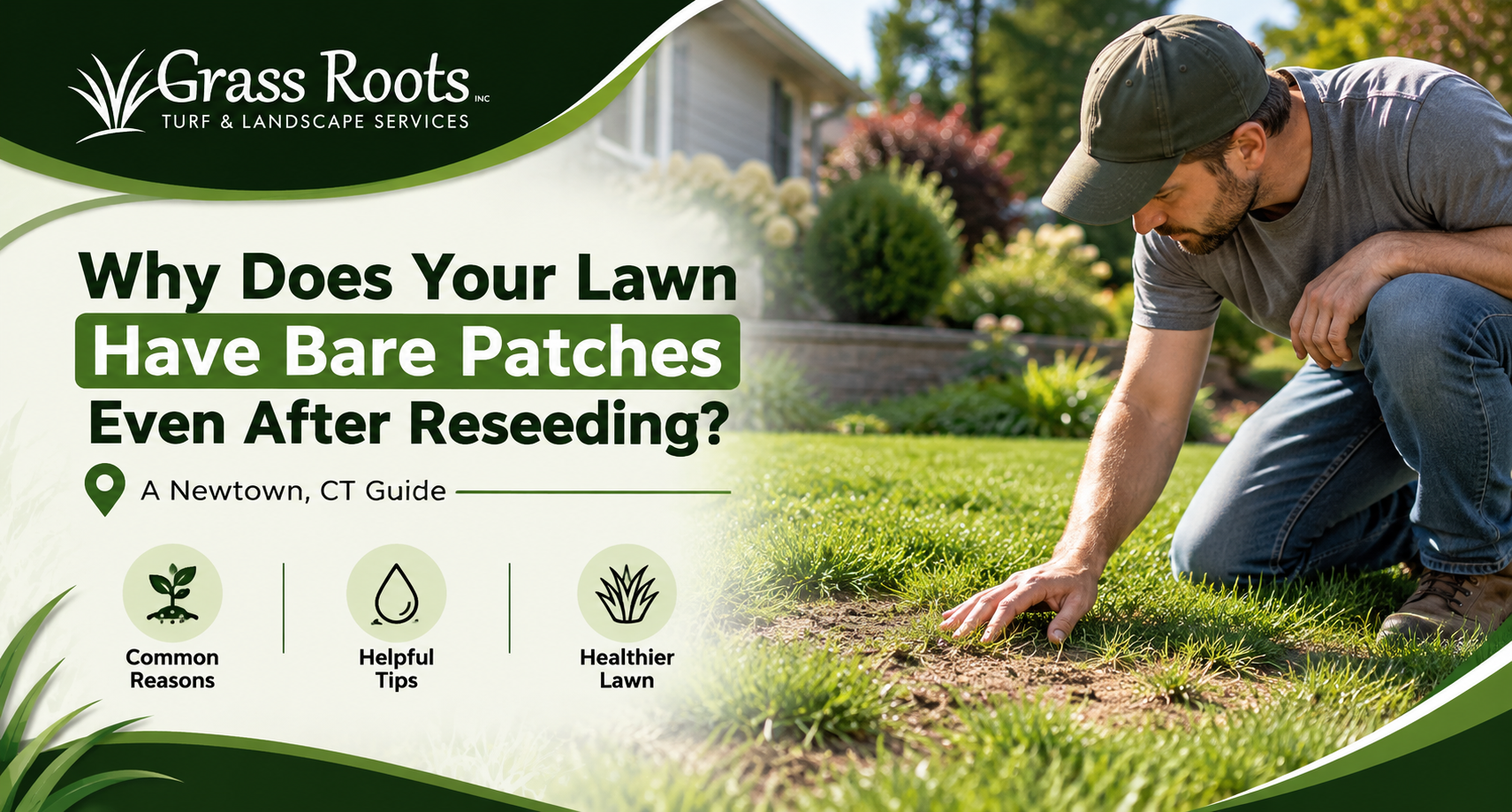
You spend time preparing your lawn, spreading fresh grass seed, and watering regularly, hoping those empty spots will finally turn green. But weeks later, some areas still look thin, patchy, or completely bare. This can be frustrating, especially when you’ve already tried reseeding more than once. For homeowners in Newtown, CT, bare lawn patches are a common concern because grass growth depends on several factors beyond simply adding new seed. Soil conditions, sunlight, moisture, and seasonal temperatures all influence how successfully grass establishes itself. Understanding why reseeding sometimes fails can help you identify the underlying problem and make better decisions for your lawn.
Why Doesn’t Grass Seed Grow in Certain Areas?
Grass seed needs suitable conditions to germinate and develop healthy roots. If the soil is too compacted, too dry, or covered with excessive debris, new seedlings may struggle to establish themselves. Sometimes the problem isn’t the seed itself but the environment where it was planted. For example, areas near walkways or frequently used parts of the yard often experience heavy foot traffic that compresses the soil. When roots cannot grow properly, new grass may remain weak or fail completely. Identifying these conditions before reseeding can improve your chances of achieving more consistent lawn coverage.
Can Compacted Soil Prevent New Grass From Growing?
Yes, compacted soil is one of the most common reasons bare patches return after reseeding. When soil particles become tightly packed, there is less space for air, water, and developing roots. This makes it difficult for young grass plants to grow strong enough to survive. Compaction often develops in areas where children play, pets run, or lawn equipment frequently passes. Homeowners may notice that water collects on the surface or that the ground feels unusually hard. Aeration, when appropriate for the lawn’s condition, can help improve soil structure and create a healthier environment for new grass.
Does Too Much Shade Cause Bare Lawn Patches?
Sunlight plays an important role in healthy grass growth. Areas beneath large trees, beside fences, or near buildings may receive fewer hours of direct sunlight than the rest of your yard. Even shade-tolerant grass varieties need adequate light to survive. Tree roots can also compete with grass for moisture and nutrients, making these locations particularly challenging. If the same shaded patches remain bare despite repeated reseeding, consider whether the selected grass variety is suitable for those conditions. In heavily shaded areas, alternative landscaping options may be more practical than continually trying to establish grass.
Could Improper Watering Be the Reason Reseeding Fails?
Watering is essential during seed germination, but both insufficient and excessive moisture can cause problems. Newly planted seeds generally need consistent surface moisture until they germinate, while established seedlings benefit from watering practices that encourage deeper root growth. If the soil dries out repeatedly during germination, seedlings may fail to develop. On the other hand, overly saturated soil can reduce oxygen availability and contribute to poor root development. Sloped areas may also lose seeds when heavy watering causes runoff. Adjusting watering frequency according to soil conditions, weather, and grass development can help improve results.
Does the Time of Year Affect Grass Seed Growth?
Timing can make a significant difference when reseeding lawns in Newtown, CT. Many Connecticut lawns contain cool-season grasses, which generally establish best during late summer and early fall when soil temperatures remain favorable and daytime heat begins to decrease. Spring can also support growth, although young grass may face greater competition from weeds and increasing summer temperatures. Seeding during extremely hot or cold conditions may lead to uneven germination. Planning lawn improvements around seasonal growing conditions gives new seedlings a better opportunity to develop strong roots before stressful weather arrives.
Can Poor Soil Quality Cause Bare Patches to Return?
Healthy grass depends on soil that provides suitable nutrients, drainage, and growing conditions. Soil with an unsuitable pH or nutrient imbalance may prevent seedlings from developing properly, even when watering and sunlight appear adequate. Adding fertilizer without understanding the soil’s needs isn’t always helpful and may sometimes create additional problems. A soil test can provide useful information about pH and nutrient levels, helping homeowners make more informed decisions. Working with a Professional landscaping company in SHERMAN CT can also help property owners better understand landscape conditions that may affect long-term lawn health.
Why Do Bare Patches Keep Appearing in the Same Places?
When bare spots repeatedly return to the same locations, there may be an ongoing problem that reseeding alone cannot solve. Heavy foot traffic, pet activity, drainage issues, lawn diseases, or insect damage can prevent grass from establishing itself. For example, areas where water regularly collects may remain too wet for healthy root growth, while frequently used pathways may experience repeated soil compaction. Before purchasing more seed, observe how the affected areas behave during different weather conditions. Identifying the actual cause is often more effective than repeatedly covering the same spots with new grass seed.
How Can You Improve Your Chances of Successful Reseeding?
Successful reseeding begins with proper preparation rather than simply spreading seed over bare ground. Remove accumulated debris, loosen the soil surface when needed, and choose grass seed suited to the area’s sunlight and growing conditions. Good seed-to-soil contact helps support germination, while appropriate watering protects developing seedlings. It’s also important to limit foot traffic until the grass becomes established. Homeowners considering Lawn care services in NEWTOWN CT can explore professional assistance with identifying lawn problems and developing a suitable maintenance approach. Consistent care after germination is just as important as the initial seeding process.
Final Thoughts
Bare lawn patches can return after reseeding for several reasons, including compacted soil, limited sunlight, improper watering, poor soil conditions, and seasonal challenges. Simply adding more seed may provide temporary improvement, but lasting results depend on understanding what prevents grass from growing in the first place. Taking time to evaluate your lawn can help reduce repeated frustration and unnecessary maintenance.
For homeowners in Newtown, CT, Grass Roots Inc offers landscaping and lawn care services to help maintain healthier, more attractive outdoor spaces. With proper preparation, suitable growing conditions, and ongoing maintenance, a patchy lawn can gradually become stronger and more consistent.